
Articles > Advertising & Paid Media, Marketing Strategy
Why One Ad Won’t Get You the Results You Want
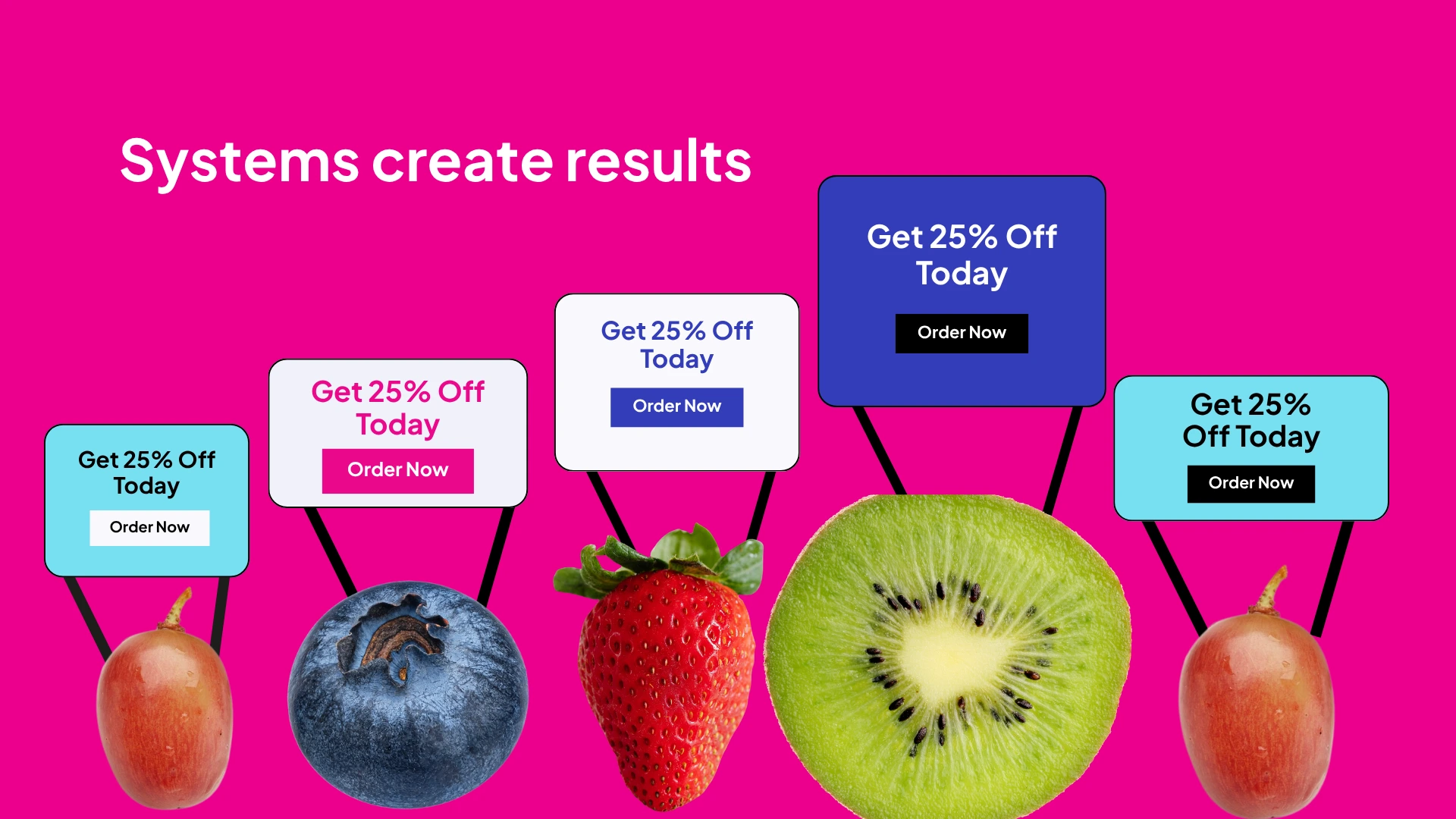
I had a client once who spent $2,000 on a single Facebook ad. Good creative. Solid copy. Targeted well. It ran for two weeks and she was gutted when nothing happened.
“But the ad was really good,” she said.
It was. That wasn’t the problem.
The problem was thinking one ad is a strategy. It’s not. One ad is a lottery ticket. And you wouldn’t build your business on a lottery ticket, so why would you build your marketing on one?
What actually happens when you run one ad
You show up once. Maybe twice. Then you vanish. And your audience? They’ve already forgotten you exist. Most people need to see a brand somewhere between 7 and 15 times before they’ll even consider buying. That’s not a marketing theory, that’s just how our brains are wired. We don’t trust what we’ve only seen once. We scroll past. We forget. Something shinier grabs us.
One ad can’t build awareness, earn trust, drive consideration, and close the sale all at once. That’s four jobs for one piece of creative. You wouldn’t ask your receptionist to also run your accounts, manage your sales pipeline, and set the company strategy. Same logic applies here.
The organic reach problem nobody wants to talk about
Facebook and Instagram organic reach is sitting at roughly 0.1% of your followers. If you’ve spent years building 5,000 followers, about 5 of them see your post. Five.
So organic isn’t picking up the slack. And one ad isn’t replacing an entire strategy. What works is showing up consistently, strategically, over time. Not a sprint. A rhythm.
What “always-on” actually looks like
This doesn’t mean spending $10,000 a month. Some of our clients run always-on ad strategies for $500 a month, and it works because the thinking behind it is sound.
Always-on means something is running at every stage. A brand awareness campaign at the top. A consideration piece in the middle. A conversion ad at the bottom. They feed each other. The person who saw your story ad last week sees your case study this week. Next week, they see the offer. That’s how real buying decisions happen, in layers, not in one hit.
The alternative is what most businesses do. Burst campaigns. Throw $2,000 at an ad for a fortnight. Get disappointed when it doesn’t convert immediately. Pull the budget. Go dark for three months. Then start from scratch wondering why nothing sticks.
Every time you go dark, you reset. All that awareness you paid for? Gone. You’re paying to re-introduce yourself to people who already forgot you. That’s not a strategy. That’s an expensive hamster wheel.
Going viral isn’t a plan
Sure, it happens. A post takes off and the numbers look incredible for a week. But you can’t reverse-engineer a viral moment, and you can’t build next quarter’s revenue around one. Planning your growth around going viral is like planning your retirement around winning Lotto. Fun to dream about. Terrible business model.
The businesses that actually grow are the ones showing up consistently with a clear message. Not louder. Just more often, more strategically, and more connected to what their audience needs to hear right now.
So what should you actually do?
Stop thinking in campaigns. Start thinking in systems.
A campaign has a start date and an end date. A system runs. It adapts. It compounds.
Set a monthly ad budget you can sustain, even if it starts small. Build creative that serves different stages of the buyer journey, not just one “buy now” ad. Test. Learn. Adjust. And give it three months minimum before you judge whether it’s working. Month one is learning. Month two is optimising. Month three is where the results start to stack.
One ad won’t save your business. But a smart system running consistently, with creative that connects and targeting that’s dialled in? That changes everything.
It doesn’t have to cost the earth. It just has to be strategic.
